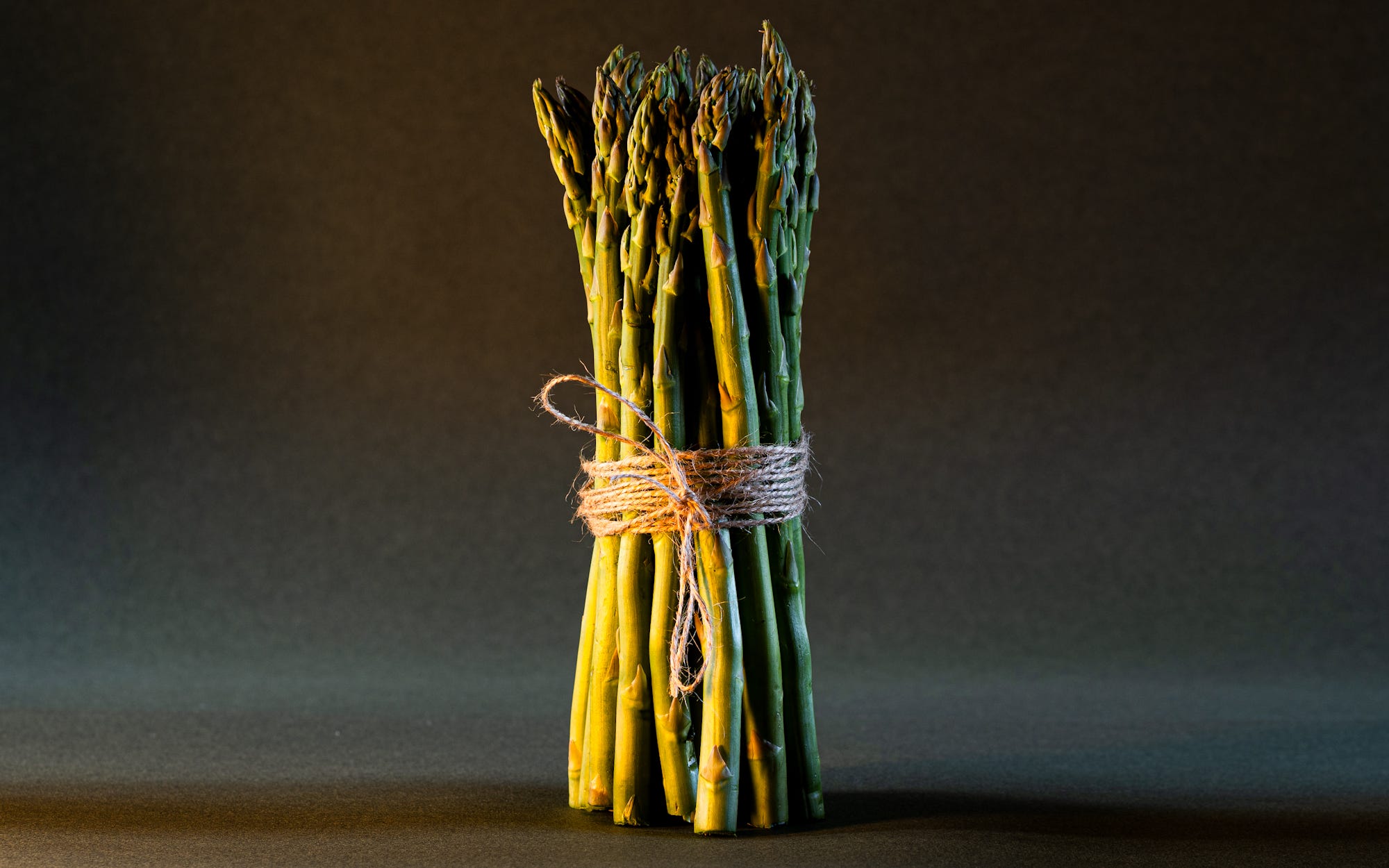
Asparagus (Asparagus officinalis) is one of the world’s most ancient vegetables, with roots that reach deep into history.
It once grew wild across Europe, western Asia and North Africa, before making its way into the heart of gardens and kitchens. Ancient Egyptians treasured asparagus as early as 3000 BCE, and the Greeks celebrated its reputation for healing.
The Romans elevated asparagus to luxury status, cultivating it widely and carefully documenting their secrets for growing, preserving, and cooking it. After Rome’s decline, asparagus lingered in quiet monastery gardens, waiting to reclaim the spotlight during the Renaissance.
Louis XIV transformed asparagus into a royal delicacy, elevating its status at the French court. Eager for fresh spears beyond spring, he tasked the Versailles garden director with perfecting its cultivation. Ingenious techniques like heated beds of fermenting manure, glass cloches and sheltered walls coaxed early and abundant harvests. The triumph of the Potager du Roi, which produced asparagus and other fruits out of season, sparked a horticultural revolution among French aristocrats and secured asparagus’ place as a symbol of prestige.
Nutritionally, asparagus is a powerhouse: low in calories yet brimming with dietary fibre, folate, and vitamins A, C, E, and K. It delivers potassium and potent antioxidants like glutathione, which shield cells from harm. Its abundant water and fibre support digestion, while folate fuels healthy cell growth.
Such a wonderful vegetable needs a suitable white wine to accompany it.
Asparagus has a reputation for being a tricky companion at the wine table. Its sulphur compounds and green, chlorophyll-driven flavours can make oaky or sharply acidic wines taste oddly metallic or bitter. The best matches are wines with gentle acidity, a generous texture, and perhaps just a whisper of oak.
A white Rhône, especially from Saint-Joseph, Crozes-Hermitage, Saint-Péray, or a southern Rhône blend of Marsanne, Roussanne, and Viognier, brings lush stone-fruit flavours, gentle floral scents, and a smooth, rounded texture that flatters asparagus while letting its subtlety shine. These wines often carry delicate herbal notes reminiscent of asparagus, sidestepping the bold green notes that might overpower the dish.
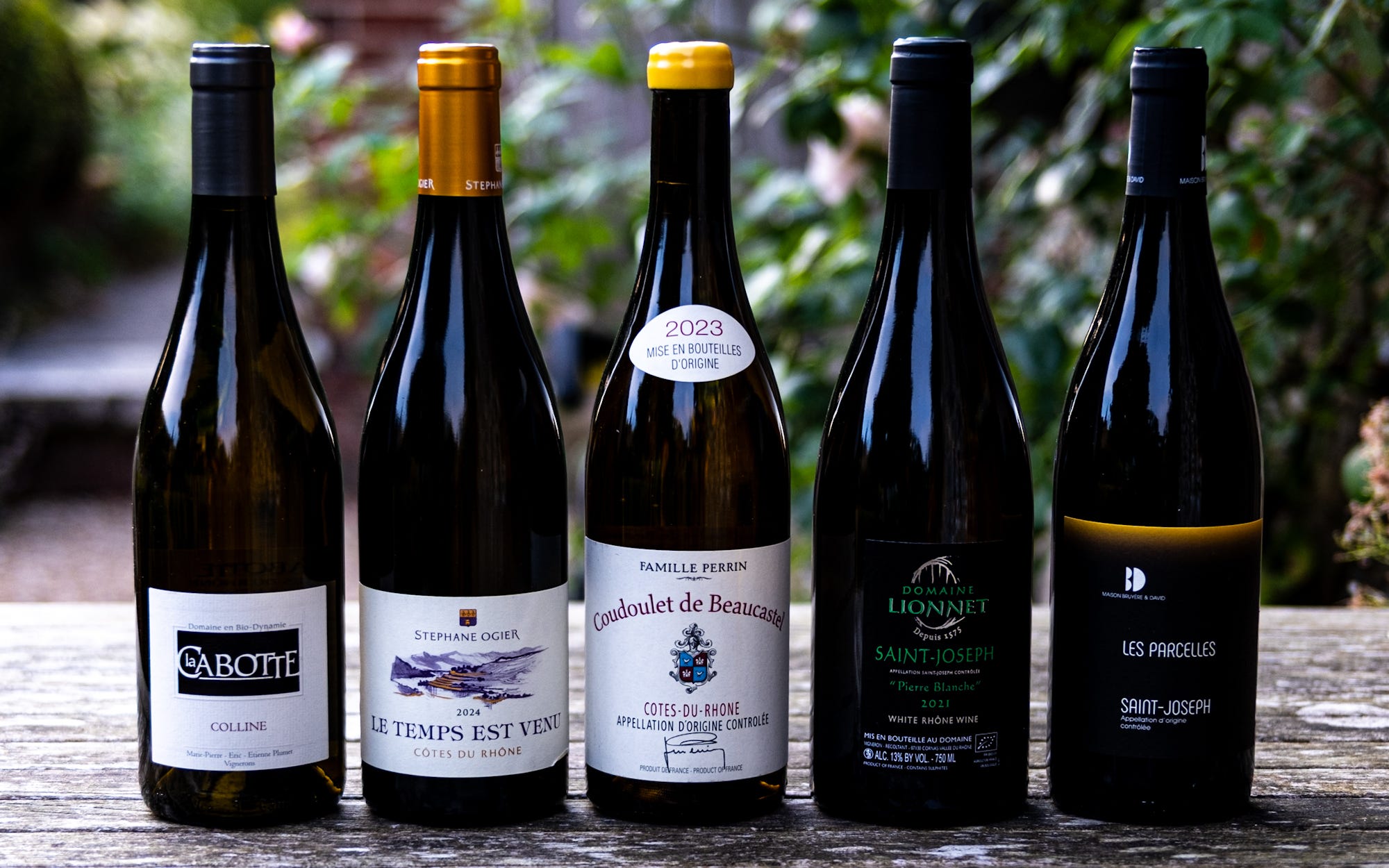
A panel was assembled, and a tasting ensued. Three white Côtes du Rhônes priced from £14.95 to £28.00, were pitted alongside two whites from the Northern Rhône appellation of Saint-Joseph, priced £31.50 and £36.50.
The two least expensive wines were unanimously voted the preferred options as we munched away on a selection of asparagus, various houmous-related dishes, saucisson, and prawns: pre-supper nibbles.
1 - Côtes du Rhône Blanc, Colline 2025 - Domaine la Cabotte
A family-run estate, acquired in 1981, located in the Southern Rhône close to the village of Mondragon, about 10 miles north of Orange. This is a blend of Grenache Blanc, Clairette, Viognier and Roussanne, with the nose revealing flavours of white peaches, apricots and ripe red apples. On the palate, there is a creamy texture with an underlying precision of ripe fruit perfectly balanced with refreshing acidity. It is a flawless example of a wine that is ready to drink today and would enhance asparagus as well as sit very comfortably with Coronation Chicken, Hake in a white wine sauce, and Vitello Tonnato.
£14.95 - Berrys - merchant link
2 - Côtes du Rhône Blanc, Le Temps Est Venu 2024 - Stéphane Ogier
I’ve written about this estate before and can only continue to praise what is being achieved here. Most of the estate lies in the Northern Rhône in the village of Côte-Rôtie - certainly worth a visit to this very modern winery if you are in this part of France - and Stéphane makes a red and a white under Le Temps Est Venu label from parcels of land owned in the Southern Rhône. Dominated by Grenache Blanc (60%), with a collection of other varieties to make the final blend: Roussanne (20%), Marsanne (5%), Viognier (5%), Bourboulenc (5%), Clairette (5%). Perfectly balanced and exceptional value. Light touch of honeysuckle on the nose with a hint of citrus. Stone fruits on the palate, with lemon tones mingled in with delicate acidity and a perfect finish. Richer than the Cabotte above and therefore more food-focused than an aperitif wine.
£16.25 - Berry - merchant link